

AI-enabled devices have become an integral part of modern technology, transforming everyday life by making tasks easier, more efficient, and personalized. These devices leverage artificial intelligence to perform complex tasks, learn from data, and adapt to user needs. This insight delves into the role AI plays in the evolution of technology, highlighting the devices benefiting from AI and their impact on industries and daily living.
Overview of AI-Enabled Devices
AI-enabled devices encompass a broad spectrum of technologies, each designed to make specific aspects of life or work more efficient and seamless. From enhancing the convenience of daily routines to making highly complex decisions, AI-enabled devices utilize machine learning, computer vision, and data analysis to perform tasks that were once either impossible or too time-consuming for traditional technology.
- Smart Home Devices: These devices include smart speakers, thermostats, and security systems that adjust settings automatically based on learned user preferences.
- Wearable Technology: Fitness trackers and smartwatches provide personalized health insights by continuously monitoring users’ data and giving real-time feedback.
- Autonomous Systems: Drones and self-driving cars rely on real-time data processing to navigate and make decisions autonomously.
- AI in Consumer Electronics: AI-enhanced devices like smart TVs and audio systems adjust settings based on user behavior, improving comfort and experience.
Benefits of AI-Enabled Devices
AI-enabled devices provide a wide range of benefits across multiple sectors, improving quality of life and work. The integration of AI into devices has the potential to transform daily routines, enhance personal productivity, and improve the efficiency of entire industries.
- Improved Efficiency and Automation: AI allows devices to automate routine tasks, saving users time. Smart home systems, for instance, can automatically adjust the temperature and lighting.
- Enhanced User Experience and Personalization: AI learns from interactions to provide customized suggestions, enhancing user satisfaction and engagement.
- Data Collection and Insights: AI-powered devices collect data and offer actionable insights, improving decision-making and proactive solutions, particularly in health and industry.
- Safety and Security Features: AI-driven security systems enhance safety by detecting unusual activity, while autonomous vehicles improve road safety by making real-time decisions.
Applications of AI-Enabled Devices
AI-enabled devices are revolutionizing a number of industries, contributing to greater efficiency, safety, and customer satisfaction. Their versatility allows for integration into diverse sectors such as healthcare, automotive, and IoT.
- Smart Homes and IoT Integration: AI enables connected homes, where devices communicate to create energy-efficient and customizable living environments.
- Healthcare Innovations: Wearable health monitors and diagnostic tools use AI to track metrics, monitor health trends, and assist in early diagnosis.
- Automotive Industry Advances: AI is central to the development of self-driving cars, allowing them to make decisions based on their environment, enhancing road safety.
- Industrial Applications: AI tools help optimize workflows and anticipate equipment failures, leading to reduced downtime and better resource management.
Challenges and Considerations
While AI-enabled devices offer numerous benefits, challenges persist. Privacy concerns, system reliability, high implementation costs, and evolving regulations are among the key factors companies need to address.
- Privacy and Security Concerns: Protecting user data, especially sensitive health information, is critical for AI-powered devices.
- Reliability and Bias in AI Systems: AI systems must be trained with accurate, unbiased data to avoid errors and unreliable decision-making.
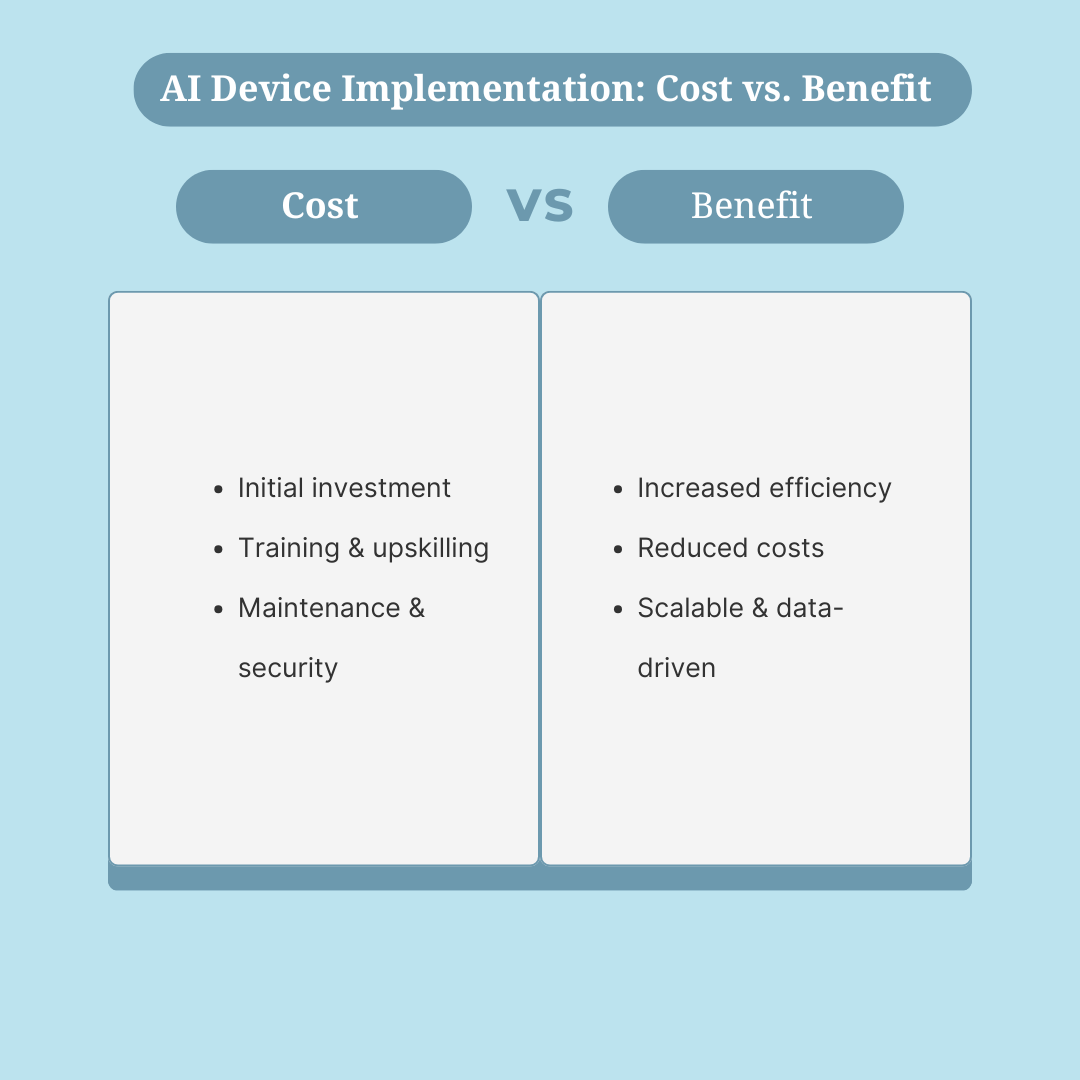
- High Costs of Implementation: Developing and integrating AI into devices requires significant investment, which can be a barrier for smaller companies.
- Regulatory Landscape and Compliance: Companies must stay informed about laws governing data collection and usage, such as GDPR, to ensure legal compliance.
Future Trends in AI-Enabled Devices
The future of AI-enabled devices is promising, with emerging technologies paving the way for even greater integration and innovation.
- Emerging Technologies: Edge AI and 5G networks will enable faster, local data processing, improving the efficiency and responsiveness of devices.
- Greater Integration Across Devices: The integration of AI across devices will lead to smarter homes, offices, and industries, where all devices work in harmony.
- Market Growth and Adoption Rates: As AI technology becomes more affordable, adoption rates will increase across sectors, expanding the capabilities of AI-enabled devices.
- Role in Climate Change and Sustainability: AI will help optimize resource use, reduce emissions, and create sustainable solutions in various industries.
AI-enabled devices are shaping the future of technology by driving efficiency, personalization, and innovation across numerous sectors. From smart homes to healthcare and autonomous vehicles, AI is revolutionizing how we interact with technology. However, there are challenges to address, such as privacy concerns, system reliability, and high implementation costs. Looking ahead, the integration of AI into more devices, coupled with advancements like 5G and edge AI, will further transform industries. The potential for smarter devices and more sustainable solutions is immense, and it is crucial that we embrace these technologies responsibly for a better future.

Co-Founder & CMO at Merfantz Technologies Pvt Ltd | Marketing Manager for FieldAx Field Service Software | Salesforce All-Star Ranger and Community Contributor | Salesforce Content Creation for Knowledge Sharing