

Google has rolled out its December 2024 Spam Update, a major algorithm change aimed at tackling AI-generated spam, scaled content abuse, and thin content. This update reinforces Google’s ongoing efforts to improve search quality by penalizing websites that rely heavily on manipulative automation and low-value AI-generated content.
Official Announcement & Key Sources
The update was officially announced on the Google Search Central Blog, where Google emphasized its commitment to curbing AI content misuse. Danny Sullivan, Google’s Public Search Liaison, and John Mueller, Google Search Advocate, also shared insights via their tweets and statements, reiterating that AI content isn’t banned but must adhere to quality standards.
For in-depth analysis, Search Engine Journal and Search Engine Land have provided coverage on how this update affects search rankings and content strategies.
What This Update Specifically Targets
- AI-Generated Spam – Content created purely for ranking purposes, with little or no real value.
- Scaled Content Abuse – Mass production of AI-generated articles to manipulate rankings.
- Thin Content – Low-quality, repetitive, or auto-generated content with minimal uniqueness.
- Doorway Pages – Websites creating multiple similar pages with no real user benefit.
- Excessive Automation – Heavy reliance on AI without human oversight, leading to content lacking originality.

Why AI-Generated Content Is Under Scrutiny
Google’s Definition of Spammy AI-Generated Content
Google has clarified that AI-generated content isn’t inherently bad, but when it is used irresponsibly to game search rankings, it becomes spam. Spammy AI content includes:
- Unedited AI-generated text published in bulk
- Lack of originality, expertise, or real user value
- Automated pages designed solely for SEO manipulation
High-Quality AI-Assisted Content vs. Low-Value AI Spam
Google differentiates between AI as an assistive tool and AI abuse for content farming:
AI-Assisted Content (Accepted by Google):
- Created with human oversight, editing, and added expertise.
- Provides valuable, accurate, and original insights.
- Aligns with Google’s E-E-A-T (Experience, Expertise, Authoritativeness, Trustworthiness) standards.
AI-Generated Spam (Penalized by Google):
- Mass-produced, unedited AI text with no human contribution.
- Content that lacks depth, originality, or usefulness.
- Pages that exist only to manipulate search rankings.
Understanding ‘Scaled Content Abuse’
One of the primary reasons for this crackdown is the mass production of AI content designed to flood search results. Google sees scaled AI content abuse as harmful because:
- It dilutes search quality with redundant, low-value pages.
- AI-generated content lacks personal insights, making it less helpful.
- Websites using bulk AI content have suffered major ranking drops post-update.
Google’s Push Towards E-E-A-T
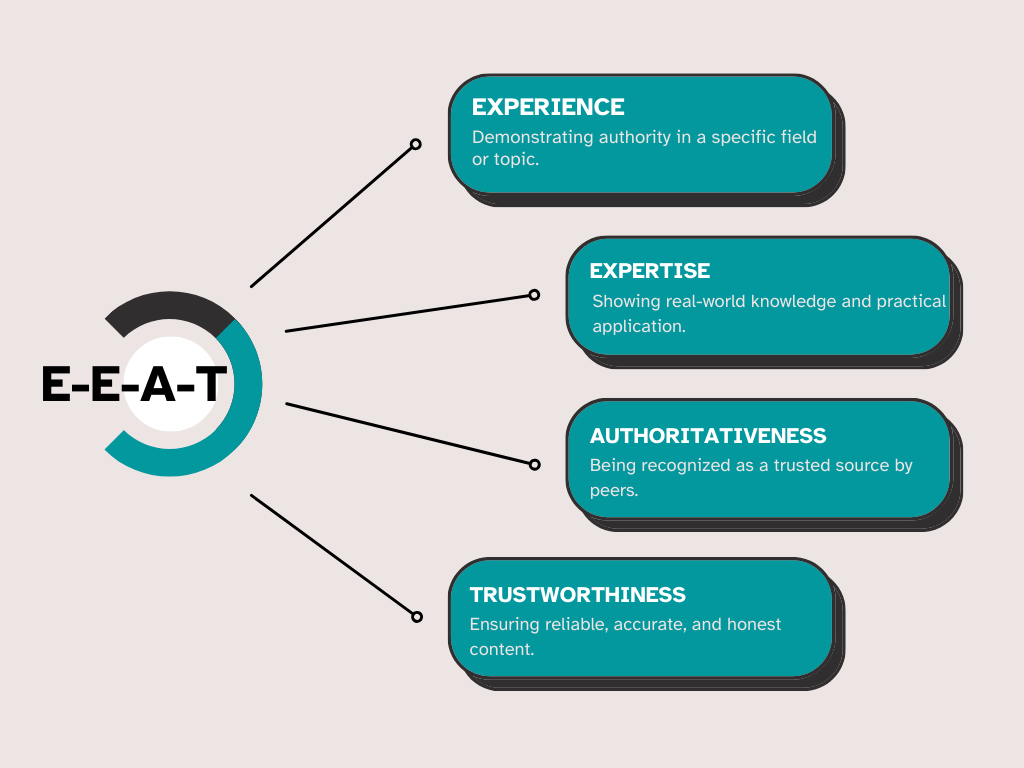
Google’s E-E-A-T framework now plays a bigger role in determining content quality. Websites producing AI content must ensure:
- Experience – Does the content reflect first-hand knowledge or expertise?
- Expertise – Is the content well-researched and factually accurate?
- Authoritativeness – Is the source credible in the industry?
- Trustworthiness – Is the information reliable and verifiable?
Google’s Stance on AI Content
Official Google Statements on AI-Generated Content
Google maintains that AI-generated content is not banned, but it must meet quality and originality standards. In a recent blog post, Google stated:
“AI content is not inherently bad. However, when used to manipulate rankings without adding value, it violates our spam policies.”
AI-Assisted Content vs. Automated Spam
Google has categorized AI content into two key groups:
AI-Assisted Content (Accepted & Ranked Well):
- AI is used as a support tool, not a full replacement.
- Content is fact-checked, edited, and enriched with human insights.
- It follows Google’s E-E-A-T principles and adds user value.
AI-Generated Spam (Flagged & Penalized):
- Fully automated, mass-produced AI content without human input.
- Lack of originality, low engagement, and SEO-driven intent.
- Fails to provide useful or insightful information.

Google’s New Spam Policies & Focus on Quality
With this update, Google has further refined its spam-detection mechanisms:
- Advanced AI detection tools to identify and demote AI spam.
- Stronger penalties for scaled content abuse and excessive automation.
- Greater emphasis on originality, depth, and human expertise in content.
Key Takeaways for Content Creators
- AI should enhance, not replace, human expertise.
- Adding real-world experience and analysis is crucial.
- Content must serve users, not just manipulate rankings.
Why AI Content Is Targeted
Google’s December 2024 Spam Update takes a strong stance against excessive AI-generated content, primarily because it degrades search quality. While AI can be used responsibly, Google sees mass automation without human input as spam—leading to penalties for sites that rely on it excessively.
- Lack of Originality & Depth – AI-generated content often rehashes existing information without adding unique insights or real-world expertise.
- Scaled Content Abuse – Many websites mass-produce AI content to flood search results, creating thousands of pages with minimal human intervention.
- Manipulation of Search Rankings – Instead of serving users, excessive AI content is often designed only for SEO, which Google considers a violation of its quality guidelines.

Problems with Content Farms & AI-Generated Pages
- AI-driven content farms publish millions of low-quality articles to manipulate rankings.
- Google considers such websites thin-content spam, as they provide no real value to users.
- Excessive automation creates misleading, repetitive, or inaccurate content, making search results unreliable.
How AI-Generated Doorway Pages Manipulate Search Rankings
AI-generated doorway pages are a major target of this update. These are low-quality pages designed to rank for specific keywords but provide little useful content.
How they work:
AI tools generate thousands of similar landing pages with slight variations.
Users click on these pages expecting value but find generic, low-depth content.
Google identifies this pattern as manipulative and penalizes such sites.
Google’s update is a direct attack on scaled AI content farms and doorway pages, reinforcing the need for human oversight and value-driven content.
Who Is Affected? Case Studies & Data
Massive Ranking Drops for AI-Heavy Sites
Websites relying heavily on AI-generated content have seen dramatic ranking drops. Case studies show that Google’s AI-detection mechanisms have improved, allowing it to identify and penalize AI spam at scale.
Case Study 1: Large-Scale AI Content Site Loses Traffic (GSQI Analysis)
- A news-style website with millions of AI-generated articles saw a massive traffic decline after the update.
- Google flagged its overuse of AI without human oversight, causing a 60-80% drop in rankings.
- The site had relied on bulk AI content with minimal editing, leading to thin, repetitive content.
Case Study 2: AI-Generated Doorway Pages & a 70% Ranking Drop
- A website that created AI-generated doorway pages to rank for multiple local service keywords saw a sharp traffic decline.
- Before the update, it ranked well by automatically generating thousands of city-specific pages with similar AI-written content.
- After the update, its rankings plummeted by 70%, as Google identified these pages as manipulative and spammy.
Industries Most Affected
- Affiliate Sites – Websites that auto-generate product reviews using AI saw major ranking losses.
- AI Content Mills – Platforms producing thousands of AI-written articles daily faced penalties.
- PBNs (Private Blog Networks) – AI-generated link-building content was flagged as spam, impacting PBN owners.
Google’s crackdown shows a clear shift towards prioritizing human-driven, high-quality content over mass AI automation.
Key Takeaways from Impacted Sites
Lessons from Case Studies
- AI alone cannot create high-ranking content—human oversight is crucial.
- Websites relying on AI automation for bulk content production are now at high risk.
- Google’s algorithm is better at detecting AI spam and penalizing scaled content abuse.
High-Value AI Content vs. Spammy AI Content
High-Value AI Content:
- Used as an assistive tool, with human fact-checking and expertise.
- Adds original insights, research, and E-E-A-T compliance.
- Improves readability and engagement rather than mass-producing text.
Spammy AI Content:
- Bulk-generated without human intervention or editing.
- Designed only to manipulate rankings, not to inform users.
- Repetitive, thin, or misleading content with no added value.
The Role of Human Oversight in AI-Assisted Writing
- Editing & fact-checking AI output is essential to avoid misinformation.
- AI-generated drafts should be refined with human expertise to add depth.
- Websites that blend AI with human oversight are less likely to be penalized.
The December 2024 Spam Update makes it clear: AI is a tool, not a replacement for quality content. Sites that misuse AI will continue to face severe ranking drops, while those balancing AI assistance with human expertise will remain competitive.
How to Ensure AI Content Remains Compliant with Google Guidelines
Google’s latest updates reinforce the importance of high-quality, user-first content, making it crucial to follow best practices when using AI-generated content. To stay compliant, websites must blend AI assistance with human expertise while ensuring value-driven, well-researched content.
Follow E-E-A-T Principles
Google prioritizes content that follows E-E-A-T (Experience, Expertise, Authoritativeness, Trustworthiness). To align with these guidelines:
- Ensure content is written or reviewed by experts with real-world experience.
- Add first-hand insights and credible sources for fact-checking.
- Use author bylines and references to establish authenticity.

Adopt a Hybrid Approach (Human + AI Collaboration)
AI should be used as a content assistant, not a replacement for human writers. This hybrid model ensures:
- AI speeds up research, but humans refine the final output.
- AI generates drafts, but editors ensure clarity, structure, and engagement.
- The final content feels natural and is optimized for users, not just search engines.
Use AI for Ideation, Not Full Automation
How to use AI effectively:
- Brainstorm content ideas and improve outlines.
- Generate small content snippets that are fact-checked and expanded upon.
- Avoid fully automating blog writing, as Google penalizes AI-heavy spam.
Avoid Keyword Stuffing & Mass AI Content Production
Google’s algorithm detects over-optimized AI content, so:
- Use keywords naturally within the content.
- Ensure a balanced word count to prevent thin or repetitive AI text.
- Focus on quality over quantity to maintain search rankings.
By combining AI efficiency with human expertise, content creators can produce engaging, Google-compliant articles that rank well without risking penalties.
Step-by-Step Guide to AI Content Creation Done Right
Google’s updates emphasize thoughtful, well-structured AI-assisted content creation. Instead of generating entire blogs with a single AI prompt, follow this structured workflow for optimized and high-value content.

Step 1: Research the Topic Thoroughly
Before generating content, deep research is essential.
- Find credible sources – Use official reports, case studies, and industry publications to gather accurate data.
- Understand user intent – Identify what users expect when searching for a topic.
- Plan content structure – Organize headings, subtopics, and key takeaways to ensure a logical flow.
Pro Tip: Avoid relying solely on AI-generated research—fact-check and cross-reference information.
Step 2: Outline the Blog
Before using AI tools, create a detailed content blueprint.
- Define the structure – Break the content into clear sections and subsections.
- Determine word counts – Assign specific lengths to each part to maintain balance.
- Decide on visuals – Plan images, charts, or infographics that enhance readability.
Step 3: Use AI Tools to Generate Content in Segments
Never generate an entire blog at once—this leads to low-quality, repetitive AI text. Instead:
- Generate one section at a time and review the quality.
- Edit and refine each paragraph before moving forward.
- Maintain a consistent tone and readability.
Pro Tip: AI-generated text should serve as a draft, not the final version—always fine-tune output.
Step 4: Set Specific Word Counts for Each Section
Pre-planning word counts helps maintain:
- Balanced and well-structured content.
- Avoidance of keyword stuffing while keeping the text natural.
- A logical, user-friendly reading experience.
Example:
- Introduction – 150 words
- Main sections – 200-300 words each
- Conclusion – 100 words
Pro Tip: Avoid unnecessary AI-generated filler—concise, valuable content ranks higher.
Step 5: Human Editing for Clarity & Value
AI text needs human refinement to ensure quality, accuracy, and engagement.
- Fact-check AI-generated information against credible sources.
- Add expert insights to improve authenticity.
- Ensure smooth readability—edit for grammar, tone, and user engagement.
Final Takeaway: AI is a powerful tool, but human expertise is irreplaceable. Quality beats quantity when it comes to SEO success.
Final Checklist: Do’s & Don’ts of AI Content for SEO
To ensure AI-generated content meets Google’s SEO guidelines, follow this checklist:
Do’s:
- Use AI as an assistant, not a replacement for human writers.
- Add human insights, expert opinions, and unique value.
- Ensure content matches user intent and is fact-checked.
Don’ts:
- Avoid mass-producing AI content without thorough editing.
- Don’t create low-quality, repetitive AI-generated text that lacks originality.
- Avoid over-optimized, keyword-stuffed AI content that manipulates rankings.

Streamline AI Tasks with CAPTEP – No More Manual Prompting!
Tired of writing prompts for repetitive AI tasks? CAPTEP makes it effortless by:
✔ Providing predefined AI patterns for common tasks
✔ Allowing you to create custom patterns tailored to your needs
✔ Enabling easy selection of AI models, including ChatGPT and more
✔ Supporting limited image generation for quick visual content
Save time and enhance productivity with CAPTEP. Try it today!
It’s free to try – Get Your Demo Now

Co-Founder & CMO at Merfantz Technologies Pvt Ltd | Marketing Manager for FieldAx Field Service Software | Salesforce All-Star Ranger and Community Contributor | Salesforce Content Creation for Knowledge Sharing