

Last month, I was stuck in a sea of emails and spreadsheets. I thought, “There must be a better way.” My friend had been using AI for repetitive tasks and it changed her life. She used to spend all day on boring tasks, but now she has time for new projects.
Her work became more creative. Companies worldwide are seeing the same change. AI is making work more efficient and creative.
AI does more than just automate tasks. It changes how we work. With over 60 AI tools for content, we can save a lot of time. Imagine spending less time on boring tasks and more on what we love.
Key Takeaways
- AI for Repetitive Tasks is revolutionizing workflow efficiency.
- Automation technology frees up time for creativity and innovation.
- Over 60 AI tools are available to enhance content quality and productivity.
- Amazon’s AI algorithms have significantly improved accuracy in product inspections.
- ClickUp’s automated features have led to remarkable time savings for users.
- AI tools enable designers to streamline tasks and focus on creating innovative designs.
The Rise of AI in Automating Repetitive Tasks
AI technologies have changed how companies handle repetitive tasks. I’ve seen AI make tasks more accurate and efficient. It handles simple tasks and cuts down on human mistakes.
Automation technology boosts how well things work. For example, AI chatbots give customer support 24/7. They handle many questions at once, freeing up human workers and giving quick answers.
AI helps businesses quickly go through big data, finding trends and problems. It works much faster than people, making tasks more productive. Studies show productivity can jump by up to 40% with AI.
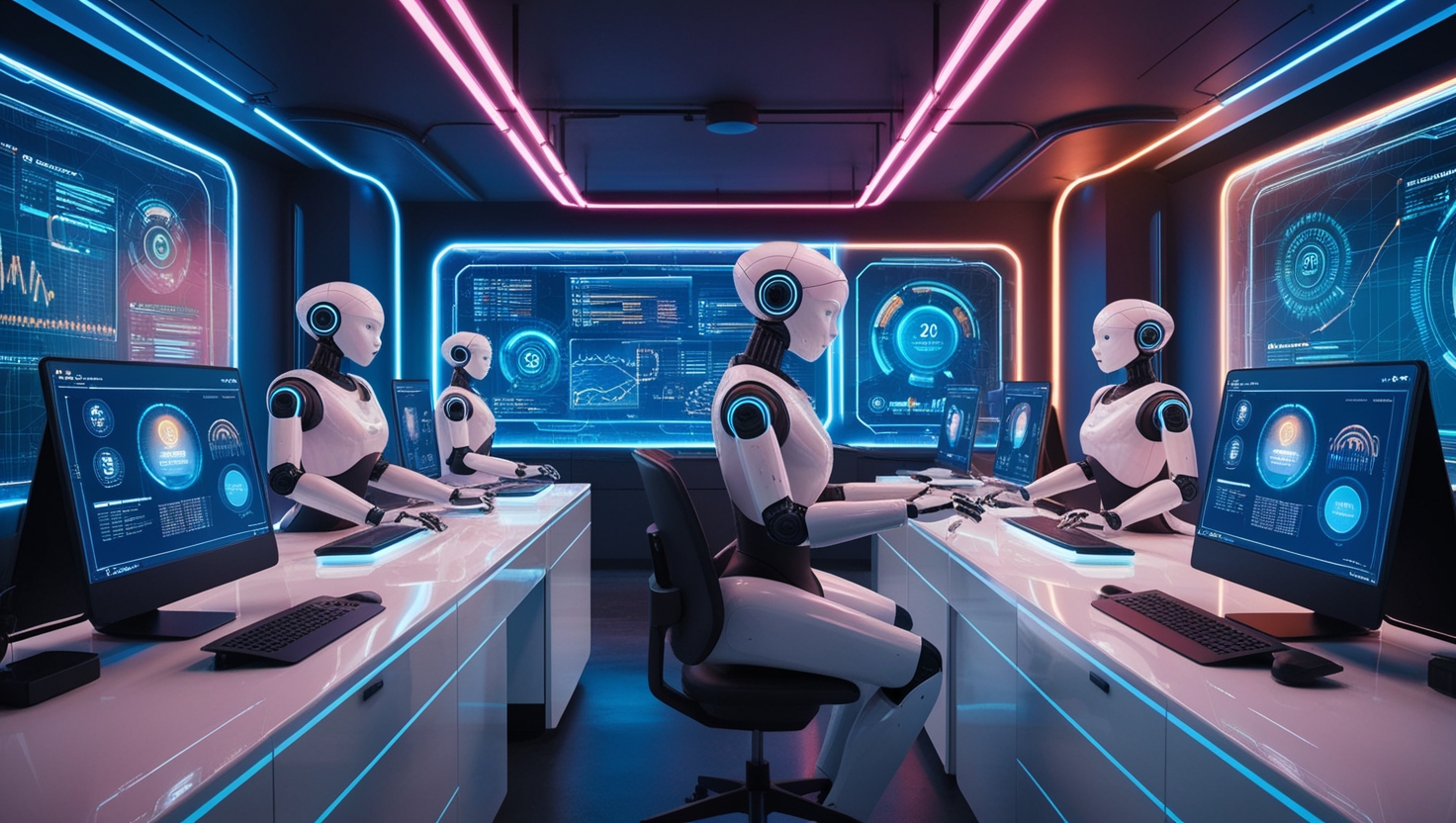
AI also saves money by reducing the need for manual work. This lets companies use their resources better. Plus, AI keeps getting better, making things work about 20-30% more efficiently.
Understanding Repetitive Task Management
Managing repetitive tasks is key to boosting productivity in any team. A strong framework for handling these tasks is essential for success. AI helps automate these tasks, saving time for more important work.
Did you know that 80% of executives think automation can help any business? This shows how much potential there is in using AI every day. For instance, Amazon’s AI in warehouses checks for damaged goods three times better than people.
Today, customers want quick answers, with almost 90% seeing fast replies as crucial. This need for speed makes managing repetitive tasks even more important. McKinsey says AI could add up to $4.4 trillion to the global economy, showing its value.
Some might think automating tasks is easy, but 65% think simple tasks aren’t valuable. But, AI can automate 85% of tasks that follow clear rules. Using AI in task management can really improve how we work every day.
AI for Repetitive Tasks: Unlocking Efficiency
Using AI for repetitive tasks makes businesses more efficient. Many companies use automation to make their workflows better. This lets employees work on important tasks instead of simple ones.
By using these new systems, businesses save time and boost productivity. They can do more in different areas of their work.
Streamlining Workflows through Automation Technology
Automation is key to better workflow management. For example, AI can make operations up to 40% more efficient. This is because AI works all the time, saving money and reducing mistakes.
AI doesn’t just make things faster. It also makes tasks like data entry and inventory management more accurate. This means fewer errors for humans.
Increasing Productivity and Reducing Burnout
AI has a big impact on productivity. About 73% of companies use or plan to use AI for automating tasks. This shows a big move towards smart systems.
These technologies take away the stress of boring tasks. They also give teams useful insights. This makes work more fulfilling and helps prevent burnout.
Real-World Examples of AI in Action
In today’s fast-paced world, AI helps a lot. Companies use AI to make their work better and happier customers. Here are two examples that show AI’s power.
Amazon’s Use of AI for Product Inspection
Amazon uses AI to check products better. AI finds damaged items quickly and accurately. This means customers get good products.
By using AI for checking, Amazon works better and makes customers happier. This shows how AI can make things better for everyone.
ClickUp’s Automation Features Enhancing Project Management
ClickUp uses AI to help with project management. It automates tasks like sending reminders. This saves time and reduces mistakes.
With AI, ClickUp lets teams focus on creative work. This shows how AI can change how we work for the better.
Challenges in Implementing AI Solutions
AI in workplaces has many benefits, but it also comes with challenges. One big challenge of AI integration is the technical hurdles. Adding AI for repetitive tasks means updating IT systems, which is hard and takes a lot of resources. Companies need to get ready for these changes and make sure their systems can handle new tech.
Training employees is another big challenge. AI changes fast, and workers need to keep learning new skills. Without good training, people might resist new tech. Companies should focus on retraining and upskilling their teams.
There are also ethical issues with AI solutions. Problems like bias in AI and privacy concerns show the big responsibility companies have. Making sure AI is fair and accountable needs constant checking and working with ethics experts. Companies must tackle these issues to protect their tech investments and build trust.
Ethical Considerations in AI Integration
AI is becoming more common in many fields, and ethics are key. Companies need to focus on ethical AI to build trust and responsibility. Trust comes from being open about how AI makes decisions.
Ensuring Transparency in Decision-Making Processes
Transparency in AI is crucial. It helps users and stakeholders trust AI tools. When they understand how AI works, they feel more comfortable with it.
Being open about data use and decision-making helps. It also leads to talks about the need for ethical AI rules.
Addressing Privacy and Bias Issues
Privacy is a big deal in AI. AI deals with a lot of data, which raises privacy concerns. Strong data policies are needed to keep user info safe.
Bias in AI algorithms is another issue. It can lead to unfair practices, like in hiring or lending. To avoid this, AI systems should use diverse data. This way, AI can be used responsibly and fairly.
Machine Learning for Efficiency in Workplaces
Machine learning is key in today’s workplaces, making things more efficient. Robotics automation is a big part of this change. It makes repetitive tasks faster and more precise.
This change helps employees focus on more important tasks. It also boosts productivity across the board.
The Role of Robotics in Process Automation
Robotics automation changes how tasks are done in many industries. It takes over routine tasks, freeing up people for more important work.
Business leaders are using AI to get better insights and improve processes. About 91% of them have an AI strategy for this purpose.
Thanks to automation, employee productivity has gone up. Two-thirds of leaders say their teams work better with these technologies.
Generative AI: Enhancing Content Creation and Idea Generation
Generative AI is a game-changer for creativity in the workplace. It helps with content creation and encourages new ideas.
As AI gets better, it can create new ideas and make processes smoother. By 2025, AI is expected to create millions of new jobs. This shows the future for companies ready to adapt.
The Future of Work with AI Technologies
The workplace is changing fast with AI technologies leading the way. The pandemic caused 8.6 million job changes, showing how jobs are always shifting. By 2030, up to 30 percent of U.S. work hours could be automated, thanks to AI.
This means humans will do more creative and complex tasks. Machines will handle routine jobs, making work more interesting for people.
Jobs in STEM, creative fields, and law will change but not disappear. AI will make these jobs better, offering chances for growth. On the other hand, jobs like customer service and food service might decrease.
By 2030, 12 million more people will need to find new jobs. Those in lower-wage jobs and women are more likely to need to change careers. This shows the need for workers to be adaptable and keep learning.
Skills like data literacy, adaptability, and communication will become key. Companies must invest in training to help employees keep up with AI changes. This way, they can stay competitive and thrive in an automated world.
Balancing Human Creativity with AI Automation
Exploring AI automation shows us how key it is to keep human creativity and tech in balance. Today’s work world needs more than just knowing how to use AI. It also values strong teamwork skills. These skills help us work well together in AI settings, boosting our work while keeping our human touch.
The Importance of Interpersonal Skills in AI-Driven Environments
Adding AI to our work can make things more efficient and help us make better choices. But, there’s no substitute for the human side, especially in design and talking to people. Our creativity is key in finding the best solutions that meet project needs.
AI can create design options based on data, but we need to use our skills to pick the best ones. Working together means AI does the data work, and we focus on the creative parts.
Opportunities for Upskilling Employees in an AI Landscape
Companies need to support learning in AI to stay ahead. Training helps employees work better with AI and use new tech for creative projects. For example, tools like Adobe Creative Cloud and Canva make creating visuals easy, even for those without art training.
These tools help us be creative by making design simpler. In fashion and ads, knowing how to use AI can lead to more effective campaigns. By focusing on learning, we not only get better at using automation but also encourage innovation, making our team more flexible.
Democratization of Skills through AI
AI is changing the job world fast. It makes learning new skills easier for people from all backgrounds. This helps everyone in the workforce grow. Soon, over 80% of companies will use AI to help their teams, making work better for all.
AI tools are opening doors for those often left out of jobs. Studies show that AI helps even those with less experience do better at work. This means we can all learn and grow faster, making work fairer for everyone.
But we must use AI wisely to make sure everyone benefits. The EU is setting rules to make AI fair and open. Also, making sure AI is accurate and fair is key to its success.
I’m looking forward to seeing how AI changes the world. Tools like ChatGPT are already being used by millions. AI has the power to make work better and education more accessible. It’s a step towards a fairer future for all.
Investing in AI-Driven Process Improvement
In today’s fast-paced world, investing in AI is key for businesses wanting to boost their efficiency. AI helps companies improve their processes, leading to cost savings and new strategies. It automates routine tasks, freeing up employees to tackle creative and critical tasks.
For example, AI chatbots in customer service make handling inquiries more efficient. This leads to better customer experiences. AI also makes HR onboarding smoother, ensuring proper training and documentation. These uses of AI show how it can transform businesses, helping them stay ahead in a competitive market.
Companies that invest in AI see quick improvements in their operations. They also set themselves up for long-term growth. As the market for business process automation grows, AI investment prepares businesses to handle market changes. It optimizes processes and encourages creativity in teams.

Co-Founder & CMO at Merfantz Technologies Pvt Ltd | Marketing Manager for FieldAx Field Service Software | Salesforce All-Star Ranger and Community Contributor | Salesforce Content Creation for Knowledge Sharing