

Every morning, I scroll through my inbox and notice emails that grab my attention. They have compelling subject lines and offer real value. Recently, a brand I love sent me an email sequence that felt like a conversation.
They started with a warm welcome, then sent personalized product recommendations. They even reminded me about items I’d left in my cart. This made me feel valued and I ended up buying without hesitation.
This experience shows the power of a well-crafted email marketing campaign. It truly makes a difference. If you’re interested in learning about effective email sequences, you’re in the right place. Let’s look at the key elements of a successful email marketing strategy that engages and converts.
Key Takeaways
- Email marketing has an impressive ROI of $42 for every $1 spent.
- Personalized emails can generate transaction rates that are six times higher.
- Automated sequences can boost click rates by 119% with timely messaging.
- Welcome email sequences can achieve an engaging 50% open rate.
- Segmented campaigns can see a whopping 760% revenue increase.
- Including customer testimonials can elevate conversion rates by 34%.
- Emails sent at optimal times can enhance open rates by up to 25%.
Understanding the Email Campaign Sequence
An effective email campaign sequence is key to any successful email marketing plan. It sends a series of emails to engage subscribers and guide them. This helps improve customer interactions and boosts conversions. Using best practices in email sequences can lead to great results.
Defining Email Sequence
An email sequence is a series of automated messages. They can be welcome emails or follow-ups, each tailored for different stages of the journey. Using an email funnel strategy ensures the content matches the audience’s needs. Personalized content helps build a connection, keeping subscribers engaged.
The Purpose of Email Sequences
Email sequences aim to nurture leads by sharing valuable insights and building relationships. They provide relevant information and tailored content to guide customers. Well-executed sequences can greatly increase engagement and conversion rates.
For instance, personalized emails can significantly boost open and click-through rates. Monitoring metrics and using A/B testing are essential to improve these sequences. They are vital for any email marketing plan.
Types of Email Sequences
Knowing about different email sequences can make your marketing better, no matter the size of your list. Each sequence has its own goal, designed to connect with customers at different times. The main types are email drip campaigns and automated email sequences.
Difference Between Drip Campaigns and Automated Sequences
Email drip campaigns send messages at set times, keeping people interested without needing them to act. This is great for building long-term relationships. Automated sequences, on the other hand, send emails based on actions like signing up or leaving items in cart. Both are key to getting more sales and keeping customers happy.
Common Types of Email Sequence
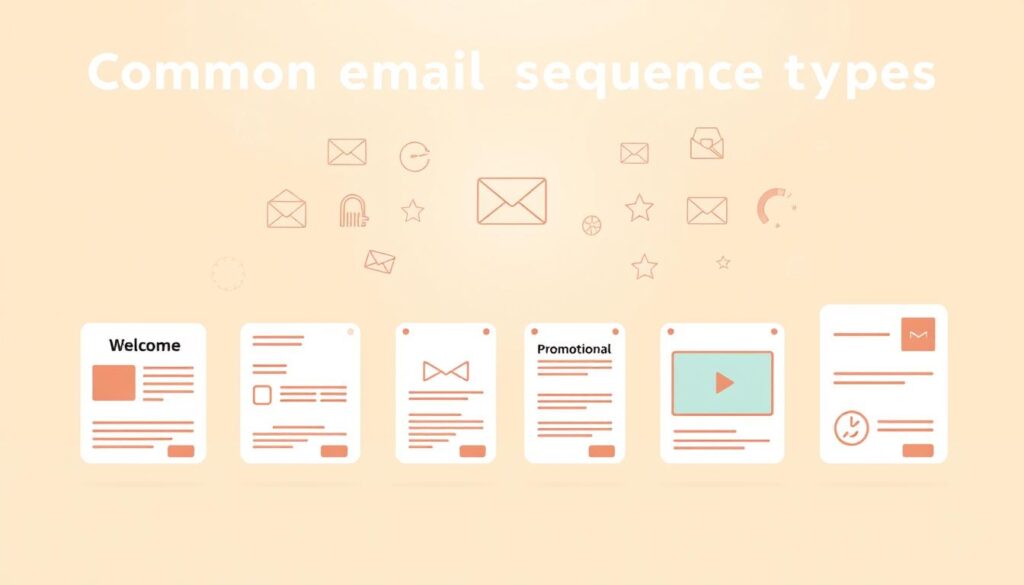
There are many email sequence types businesses can use. Welcome emails make a strong first impression for new subscribers. Onboarding sequences help new users get started with products or services.
Re-engagement emails try to bring back customers who haven’t been active. Cart abandonment sequences remind people about items they left behind, helping to increase sales. Using these sequences can really help a brand keep customers interested.
Email Campaign Sequence: Best Practices for Engagement
To make an email campaign sequence work, you need a solid plan. First, I set clear goals for my sequence. These goals can be anything from boosting sales to keeping subscribers. Knowing what I want helps me make each email just right for my audience.
Setting Clear Goals for Your Sequence
Having specific goals keeps my sequence on track. For example, if I want to sell more, I focus on promotions and deals. Emails can lead to sales at a 15% rate. So, I check how well my sequence is doing and make changes if needed.
Identifying Effective Triggers for Automation
Trigger-based emails make the customer experience better by sending the right content at the right time. I use triggers like downloads or abandoned carts to send follow-up emails. This way, I can remind people about my brand and possibly win back sales. Making sure these automated emails are well-timed and effective is key.
Crafting Compelling Content for Your Emails
Creating effective email content is key to building strong relationships with subscribers. One important part is crafting engaging subject lines. These lines are the first thing people see and can greatly affect whether they open your email. In fact, 45% of people decide to open an email based on the subject line alone.
This shows how critical it is to make subject lines that grab attention and speak to your audience.
Creating Engaging Subject Lines
Using personalization in subject lines can lead to great results. For example, using someone’s name can increase open rates by 20%. As I work on email sequence best practices, I make sure each subject line is designed to spark curiosity or meet specific needs. Short, clear, and direct subject lines are best at grabbing attention and encouraging people to open the email.
Delivering Value Through Personalization
Personalization goes beyond just subject lines; it’s throughout the email content. By using subscriber data, I can address people by their names and tailor messages to their interests or past actions. Emails that offer personalized content can boost engagement, leading to up to six times more transactions. This approach not only raises click-through rates but also strengthens the bond with my audience.
Segmenting my subscriber list to target specific groups makes my email sequences more effective. By matching the messaging with my audience’s interests and characteristics, I create a more relevant and engaging experience. Consistently providing value keeps subscribers interested and makes them more likely to open future emails.
Email Automation: Streamlining Your Campaigns
Email automation is key for marketers today. It makes campaigns more efficient and effective. With email automation tools, businesses can manage their marketing better. This lets them focus on strategy, not just daily tasks.
Benefits of Email Automation
Email automation offers many benefits. It makes your work more efficient. Automated sequences help nurture leads and keep communication steady.
Personalizing your content boosts engagement. This can lead to a huge return on investment. In fact, companies using email automation can see a 4400% ROI. They also see a 25% increase in sales.
Tools for Setting Up Automated Email Sequences
Choosing the right tools for automated email sequences is important. Mailchimp, HubSpot, and EngageBay are top choices. They have easy-to-use interfaces and powerful features for email marketing.
The cost of these tools varies a lot. For example, Smartlead’s Pro Plan is for businesses that need a lot. It includes unlimited email warmups. Woodpecker and Saleshandy also offer great features like sequence tracking and advanced reporting.
Optimizing Email Sequence Timing and Scheduling
Timing is key for email campaign success. The right schedule can boost open rates and engagement. Studies show certain days and times lead to better results, making timing critical.
By studying the best times for email engagement, I can reach my audience when they’re most active. This ensures my messages get the attention they deserve.
Best Times to Send Emails for Maximum Engagement
Research shows Tuesdays and Thursdays are best for sending emails, with a 20% higher open rate. Emails sent between 10 AM and 12 PM see a 30% increase in clicks. These stats show the power of timing in email success.
Also, 50% of marketers find segmenting their lists by timing improves engagement. This proves that timing is a game-changer for email campaigns.
Frequency of Sending Emails in a Sequence
It’s important to send emails at the right frequency. Too many emails can lead to 15% of recipients unsubscribing. Finding the perfect balance keeps subscribers interested without feeling overwhelmed.
Testing different sending frequencies helps me find what works best. 40% of marketers try different times to find the best schedule. This approach improves click-through and conversion rates.
Leveraging Data-Driven Insights for Improvement
In email marketing, data is key. It guides us to better our strategies. By looking at metrics like open and click-through rates, we can make our content more engaging.
Analyzing Open and Click-Through Rates
Open rates usually fall between 15% and 25%. This shows how interested people are. Click-through rates are about 2.5% to 5%, but personalized emails can boost this by 26%.
By watching these numbers, we can see what works. For instance, testing subject lines and calls-to-action can improve results by up to 49%.
Continuous Testing and Optimization for Better Results
Using data to improve is essential. We test different things in our emails, like when and who we send them to. Tuesdays and Thursdays, between 10 AM and 11 AM, are best times to send emails.
Using dynamic content and targeting based on customer behavior can increase click-through rates by up to 35%. Regularly checking how our emails perform helps us stay on top of what our audience likes.
Examples of Successful Email Sequences from Top Brands
Learning from top brands can give us great insights into email marketing. They show how to keep people engaged and make sales. We’ll look at welcome emails and how to win back customers who left their carts.
Welcome Email Sequence Strategies
H&M is famous for their welcome emails that grab new subscribers’ attention. They offer discounts and show off their top products. This makes a strong first impression that can boost sales.
Good content and pictures make emails stand out. This leads to more people interacting with the emails.
Cart Abandonment Email Sequence Success Stories
Nykaa is great at reminding customers about items they left in their carts. They use special discounts to get people to buy. This approach helps them make back lost sales and grow their profits.
Companies that do this well see big returns on their email marketing. It’s a key way to keep customers coming back.
Advanced Strategies for Effective Email Campaign Sequences
To boost my email marketing, I focus on advanced strategies. Segmenting my audience lets me send messages that really speak to them. This means I can send emails that are more likely to get a response.
For example, if someone clicks on a link but doesn’t buy, I can send them special offers. This encourages them to make a purchase.
Timing is also key. I send emails when they’re most likely to be read. For B2B, weekdays work best. B2C does better on weekends.
I start with one email a week to keep things interesting. Follow-up emails can also help push people to buy.
Tracking how well my emails do is important. I use A/B testing to see what works best. This way, I can keep improving my emails.
Staying up-to-date with email marketing trends helps me stay ahead. This makes my email sequences not just interesting but also effective. It shows how powerful email marketing can be.

Co-Founder & CMO at Merfantz Technologies Pvt Ltd | Marketing Manager for FieldAx Field Service Software | Salesforce All-Star Ranger and Community Contributor | Salesforce Content Creation for Knowledge Sharing