

I was looking for ways to boost my B2B marketing when I met a friend using LinkedIn Ads. I was a bit skeptical at first. But they told me about the big increase in their reach and leads thanks to LinkedIn Ads. They loved how it let them target specific groups and connect with people who really needed their services.
This made me think—could LinkedIn be the secret to B2B marketing success? I decided to learn more about LinkedIn Ads. It’s getting cheaper and easier for businesses to use. With over 900 million professionals on LinkedIn, the chance to get noticed and engage with people is huge. This article will show you how LinkedIn marketing solutions can shine a light on your business and help you meet your marketing goals.
Key Takeaways
- LinkedIn Ads have become more affordable, making it easier for businesses to invest.
- Advanced targeting features ensure ads reach the most interested audiences.
- Lead Gen Forms enable high-quality lead capture directly on the platform.
- Diverse ad formats keep campaigns engaging and bolster audience interest.
- Regular A/B testing and analytics help optimize campaign performance.
- LinkedIn is significantly more effective at lead generation compared to other social platforms.
Why Choose LinkedIn for B2B Marketing?
Choosing the right platform for B2B marketing is key. LinkedIn is a top choice with over 900 million professionals. It’s filled with decision-makers and industry leaders. This makes LinkedIn marketing solutions very effective.
62% of B2B marketers find LinkedIn great for lead generation. It’s clear why—89% use it for this purpose. This shows LinkedIn’s power in reaching the right people.
LinkedIn’s targeted ads are a big plus. You can target by job title, company size, and industry. This ensures your ads hit the mark, leading to higher engagement.

LinkedIn is also cost-effective. Ads here can cost less to acquire customers, thanks to conversion tracking tools. You can see up to 2x higher conversion rates, showing its lead conversion power.
LinkedIn is also a big influencer in business decisions. It accounts for 33% of purchase intent among B2B marketers. This highlights its role in shaping business choices.
LinkedIn’s advanced targeting boosts marketing ROI. It helps connect with decision-makers across industries. Creating high-quality content is key to reaching and engaging this audience. The right content can greatly increase your brand’s reach and reputation.
Understanding the LinkedIn Advertising Platform
The LinkedIn advertising platform is a great place for marketers. It has many ad types like Sponsored Content, Text Ads, and Dynamic Ads. Each ad type has its own goal, helping you reach your target audience.
To start, you need a LinkedIn Campaign Manager account. It’s where you set your campaign goals and manage your ads.
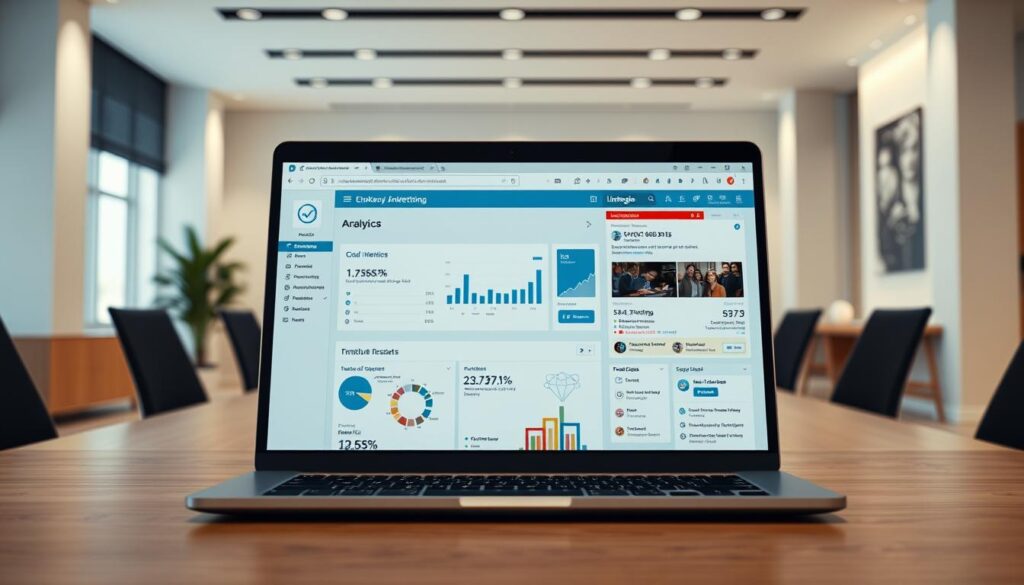
LinkedIn offers many ways to target your ads. You can choose based on company size, job title, and skills. This helps you reach the right people, increasing chances of getting them to engage with your ads.
Follower Ads help grow your LinkedIn Page follows. Spotlight Ads are great for getting people to visit your website or sign up for events.
Setting your budget is easy too. You can pay for Text Ads by the click or impression. This is good for both promoting your brand and getting leads. Tools like Budget Optimization help you spend wisely, improving your return on investment.
It’s easy to track how your ads are doing. You can see things like impressions, clicks, and spending. This lets you make changes quickly. Sponsored Messaging is special because it lets you connect directly with people, which can lead to stronger relationships than email marketing.
In summary, LinkedIn’s advertising platform gives marketers the tools they need. It helps you create campaigns that really work in the professional world.
Benefits of LinkedIn Ads for B2B Companies
Advertising on LinkedIn offers many benefits for B2B marketing. With over 740 million active professionals, I can reach decision-makers and industry leaders. LinkedIn Ads’ targeting lets me focus on job titles, industries, and company sizes. This precision increases the chance of getting qualified leads.
LinkedIn users engage with sponsored content twice as much as other platforms. My ads are more likely to be seen and interacted with. The average click-through rate for LinkedIn Ads is 0.39%, much higher than display ads on other sites.
LinkedIn Ads are also cost-effective. The average cost per click is between $2 and $7. This investment can lead to high-quality leads. 65% of B2B marketers use LinkedIn Ads to boost brand awareness. Lead generation campaigns on LinkedIn have a 6.1% conversion rate, higher than other social media.
Integrating LinkedIn leads into email marketing can improve outreach. Open rates can be between 15-25%. The platform allows for personalized and segmented messaging. It supports various ad formats, including sponsored content and dynamic ads. This ensures I can showcase solutions and testimonials effectively.
LinkedIn Ads: Key Features and Formats
Exploring LinkedIn ad formats, I find a wide variety. Sponsored Content is a key part, blending into users’ news feeds. It includes Single Image Ads, Video Ads, Carousel Ads, Event Ads, and Document Ads. Each offers a chance to connect with people through content.
Video ads, for instance, grab attention and boost engagement. They work better than static images in this way.
Sponsored Messaging offers a direct way to reach out. Message Ads feel like personal messages, making users feel at home. Conversation Ads go further, creating a chat-like experience. This encourages users to interact, not just watch.
Dynamic Ads use LinkedIn data to make ads personal. They help businesses grow awareness, drive conversions, or boost website traffic. LinkedIn’s targeting options let marketers hit the right audience. Text Ads, though, are cheaper but might get fewer clicks because of where they’re placed.
Knowing about LinkedIn’s ad formats helps me improve my ads. It helps me meet my marketing goals, whether it’s to get people talking about my brand or to make sales. Choosing the right format is key to success.
Targeted Advertising on LinkedIn
LinkedIn’s targeted ads are incredibly powerful. They let me focus on specific groups of people. I use LinkedIn ad targeting options to make sure my ads reach the right people. This approach boosts my chances of getting a good response.
For a campaign to succeed, I need at least 300 members in my audience. For sponsored content, I aim for 300,000. Text ads work best with 60,000 to 400,000 members. Targeting big companies helps me reach more people, including my 1st-degree connections.
Demographics are key in my ads. I use LinkedIn’s Age Categories to connect with the right age groups. Job functions and seniority levels help me find decision-makers. Focusing on specific skills ensures I reach experts in my field.
Location targeting is also important. I can target specific areas or IP addresses. This feature helps me run effective campaigns. I can use Matched Audiences to connect with companies I want to reach directly.
Effective Strategies for LinkedIn Ad Campaigns
To make the most of LinkedIn ad campaigns, using effective strategies is key. With over 1 billion users, LinkedIn offers a huge audience for ads. Creating ads that grab attention quickly is vital in today’s fast digital world.
One important tactic is A/B testing. This lets me try different parts of my ads, like headlines or images. By changing just one thing, I can see what works best with my audience. This makes my ads more effective.
Using LinkedIn’s data with my own data gives me a big advantage. Audience Insights show me who my audience is, like their job titles and industries. This helps me target better. Choosing the right ad format, like Sponsored Content or Message Ads, is also important.
Personalizing Message Ads can really boost their success. Retargeting users keeps them interested. In B2B marketing, it can take up to 11 times to convert someone, so keeping them engaged is key.
Setting up a lead scoring system helps me see how well my targeting works. Regular meetings with my team help us spot and fix any issues fast. With these strategies, I’m ready to run successful campaigns on LinkedIn.
The Cost of Advertising on LinkedIn
When looking at the cost of LinkedIn ads, it’s key to understand that prices can change. LinkedIn mainly uses a cost-per-click (CPC) model, with an average of about $5.39. For those focusing on impressions, the cost-per-thousand impressions (CPM) is around $6.37. This means CPC might seem high, but the quality of leads can make it worth it.
Sponsored InMail costs about $0.70 per send. While CPC is pricier, it often leads to better engagement. For brand awareness, CPM can be more budget-friendly.
LinkedIn’s text ads have a low click-through rate, about 0.02%. This suggests they’re better for exposure than quick clicks. It’s important to watch your daily spend against your budget. Using a manual bidding strategy can often give better results than automated ones.
Remember, the minimum bid for each click is $2, and the daily budget starts at $10. Adjusting your budget based on campaign performance is helpful. Advertising on LinkedIn is about managing costs to get the best return on investment.
Optimizing Your LinkedIn Ad Performance
Optimizing LinkedIn Ads requires constant monitoring and adjustments. I use key performance indicators (KPIs) like click-through rates (CTR) and conversion rates. These help me see what’s working and what’s not.
LinkedIn’s analytics tools are key. They show which ad formats and targeting strategies work best. This helps me tailor my ads to my audience.
I regularly review my ad’s creative elements. This means tweaking visuals and copy to improve engagement and conversions. LinkedIn’s targeting options are precise, helping me reach the right people.
Testing different ad variations is another important step. I try out different copy, visuals, and targeting options. This helps me understand what works best for my audience.
Setting clear goals and metrics is essential. I track awareness, consideration, and conversion metrics. This helps me adjust my strategy as needed. LinkedIn Campaign Manager provides valuable insights to guide my decisions.
Examples of Successful LinkedIn Advertising
Looking into successful LinkedIn ads shows us many useful strategies. For example, tech companies use Sponsored Content to share valuable resources like whitepapers. This attracts the right people and shows off their knowledge.
It’s not just about pretty pictures. Case studies show that using different colors can really increase Click-Through Rates (CTR). Also, bold numbers grab attention and get people to interact more.
Service businesses often use Sponsored InMail to reach out personally. This can lead to more engagement than regular emails. Repeating the call-to-action (CTA) in the ad makes it more visible and can boost conversion rates.
These examples show that ads that offer useful insights do well in getting people to visit. Simple, clear ad copy is best for getting clicks. Keeping a consistent color scheme helps brands stand out and build loyalty.
All these tactics add up to successful LinkedIn ads. They make the most of the platform’s huge audience of over 875 million professionals. This is why so many businesses want to use LinkedIn for their marketing.

Co-Founder & CMO at Merfantz Technologies Pvt Ltd | Marketing Manager for FieldAx Field Service Software | Salesforce All-Star Ranger and Community Contributor | Salesforce Content Creation for Knowledge Sharing