

When I started my online boutique, I was bursting with excitement and ideas. I built my website with care, but keeping my audience engaged was tough. That’s when I discovered email campaign sequences.
By sending out a series of targeted emails, I saw a big change. My open rates jumped by nearly 26% thanks to personalized subject lines. My customers loved the tailored suggestions, too. This was my moment of clarity—good email strategies really work.
Now, I want to share how a well-planned email sequence can change the game. It keeps your audience interested and encourages them to take action.
Let’s dive into the world of email marketing. Understanding the structure of an effective email sequence is key. It’s essential for digital marketing success. Get ready to change how you approach email outreach and unlock your campaigns‘ full power.
Key Takeaways
- Email open rates typically range from 15% to 25% by industry.
- Personalization in subject lines can boost open rates by up to 26%.
- Drip campaigns can drive engagement by 80% over standard emails.
- Including a call to action can increase click-through rates by 371%.
- Segmenting emails based on behavior can enhance conversion rates up to 760%.
- Effective email campaigns can generate an impressive ROI of $42 for every dollar spent.
Understanding Email Sequences in Digital Marketing
Email sequences are key in digital marketing. They help businesses connect with their audience through targeted messages. For example, a welcome email sequence can make new subscribers feel valued, leading to higher open and click-through rates.
Many brand leaders use email sequences to guide prospects. A typical sequence has five emails, starting with a welcome series of three to seven emails. This approach can boost engagement by 30% for onboarding messages. It helps keep subscribers engaged and builds loyal customers.
Cart abandonment is a big issue in e-commerce, with up to 85% of customers leaving items behind. Abandoned cart emails can recover 10-20% of these lost prospects. Adding a 10% discount can almost half of them complete their purchase. Carefully crafted emails can greatly improve engagement and conversion rates.
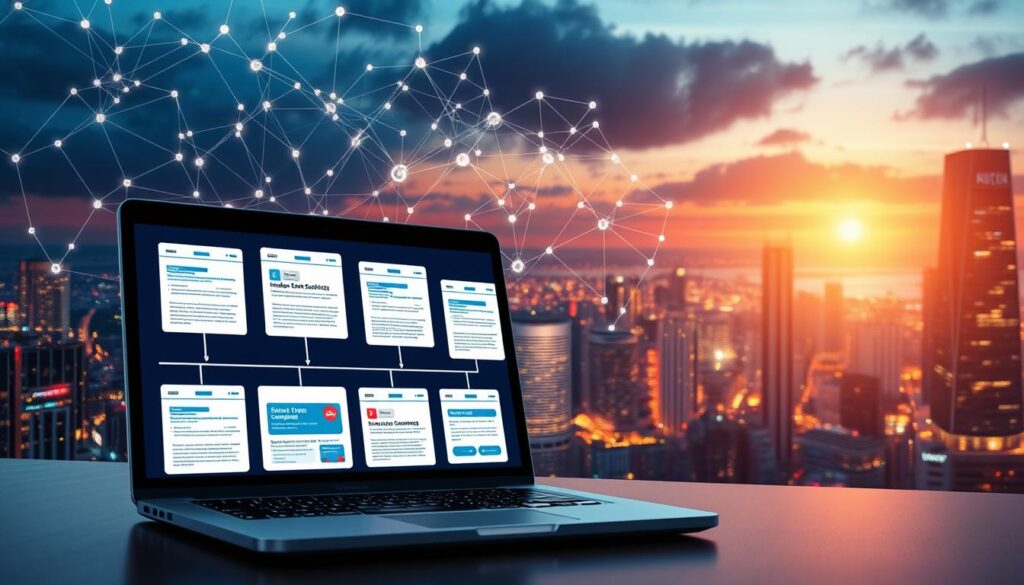
What Is an Email Campaign Sequence?
An email campaign sequence is a way to market through emails. It sends several emails over time to guide people through your brand. Knowing how to use this can really boost your marketing and sales.
Definition and Importance
This method is key for nurturing leads and getting them to take action, like buying or signing up. It’s better than just sending one email because it keeps customers engaged over time. Research shows that up to 80% of sales need five or more emails to happen.
By making emails personal, like using names or specific interests, brands can get more people to open them. This leads to better engagement and higher open rates.
Basic Structure of an Email Sequence
An email sequence has different types of emails for different goals. It usually starts with a welcome email to introduce the subscriber. Then, it sends emails with useful information to build trust.
Next, it might offer special deals to try and make a sale. It also asks for feedback or checks in to keep the customer engaged. Sending emails regularly, like every 2-3 days, keeps people interested and informed.
Email Automation: Streamlining Your Outreach
Email automation is a big help for marketers wanting to improve their outreach. It lets me connect with my audience better while saving time on manual tasks. Personalized outreach, which can get reply rates up to 57%, is easy with automation.
Automation keeps my communication consistent, thanks to triggers like sign-ups or cart abandonments. This boosts my marketing efficiency, letting me work on making my messages better. Segmenting emails can increase open rates by up to 39%, showing the importance of tailored messages.
Automated email sequences help build relationships and improve engagement. They can increase engagement by up to 40% compared to single emails. Adding a strong call-to-action in emails can also boost conversion rates by 371%.
Using email automation wisely can cut costs and boost productivity. Companies using it see a 14.5% rise in sales productivity. With 65% of B2B marketers struggling to get traffic and leads, automation’s value is clear.
In short, email automation makes my outreach better and more efficient. It helps me reach out to prospects quickly and effectively. This makes it a key strategy for anyone aiming for successful email marketing.
Crafting Your Email Marketing Strategy
Creating an effective email marketing strategy starts with a clear plan. This plan should match my campaign sequence. It’s all about setting goals and knowing who I’m targeting, which are key to success.
Defining Your Goals
Setting goals is essential when crafting my email marketing strategy. These goals might include boosting conversions, improving engagement, or raising brand awareness. Having clear targets keeps me focused and lets me track my progress.
For example, I might aim for a higher open rate or a better conversion rate. Knowing what I want helps me craft messages that really speak to my audience.
Identifying Your Target Audience
Understanding my target audience is also critical. By segmenting my audience based on their interests and demographics, I can send them content that’s just right for them. This approach boosts engagement and increases the chances of success.
With the right segmentation, my emails are more likely to resonate with my audience. This makes it easier for them to take action.
Difference Between Drip Campaigns and Automated Email Sequences
It’s important to know the difference between drip campaigns and automated email sequences for better email marketing. Drip campaigns send a series of emails at set times. They don’t need the recipient to do anything, making them easy to manage. For example, a welcome email is a drip campaign if it doesn’t consider who the recipient is.
Automated email sequences, on the other hand, change based on what the user does. This could be signing up or leaving something in their cart. They send content that is more likely to interest the user.
Drip campaigns are simple to start but use less detailed information. Automated sequences need more detailed information to be effective. This makes a big difference in how well they work, like in getting people to engage or buy.
Email sequences are great for things like helping new leads and getting people started. They offer a personal touch that drip campaigns can’t. Knowing the difference helps marketers choose the right approach for their goals. For example, some sequences aim to keep people interested, while others try to get them to do something specific.
Using the right method can really boost the success of email marketing campaigns.
Benefits of Using Email Campaign Sequences
Email campaign sequences bring many benefits to your marketing strategy. They help increase engagement and build stronger connections with your audience. A big advantage is the ability to personalize messages, making them more relatable.
By understanding what each person likes, I can send content that really speaks to them. This approach can lead to a six times higher transaction rate than generic emails.
Enhanced Personalization for Increased Engagement
Personalization is key in today’s marketing world. Studies show that 75% of consumers like it when brands know and tailor messages to them. Personalized email sequences help me connect on a deeper level.
Engagement rates can jump up to 500% with these tailored messages. Keeping my audience engaged builds loyalty and trust.
Consistent Communication and Nurturing Leads
Staying in touch with prospects is vital for lead nurturing. Email sequences help me keep in touch, guiding them toward a purchase. Automation makes this easier, sending emails that can bring in 18 times more revenue than usual.
This ongoing communication turns leads into loyal customers. In fact, businesses that use this approach see a 451% increase in qualified leads.
Email Sequence Planning: The Key Steps to Success
Planning an effective email sequence needs careful thought. I start by figuring out what my audience likes and when to send emails. Each email is key in guiding people through their journey. So, my content must match specific goals.
Success comes from making sure every email connects with the recipient. Monitoring how well each email does is vital. I look at open rates and click-through rates to see what works.
For example, welcome emails have a high open rate of 45%. They’re a must in my planning. A well-structured welcome sequence sets a good tone for future emails.
To get better results, I make my sequence unique. A generic approach doesn’t work well. The first email must make a strong impression.
Personalizing subject lines and sender names helps a lot. Testing different subject lines helps me improve my first email.
When sending abandoned cart emails, I aim for at least three reminders. Sending them at the right time helps a lot. Each email in a campaign is a chance to win back customers.
Email Funnel Optimization Techniques
To make my email campaigns better, I focus on optimizing the email funnel. I look at open rates, click-through rates, and conversions to see how well they’re doing. This helps me find out what’s working and what’s not.
Monitoring Performance Metrics
Tracking these metrics helps me keep improving the email funnel. I see how well my emails are doing by looking at open and click-through rates. This tells me if my strategy is working.
Most people check their emails in the morning or at least once a day. So, it’s key to grab their attention then. I aim for my emails to not just get opened but to also get people to take action. In fact, 66% of people have bought something because of an email.
A/B Testing for Continuous Improvement
A/B testing is a big part of how I keep improving. I try out different subject lines or content types to see what works best. For example, emails with personalized subject lines get opened 26% more often.
Segmenting email lists can also increase revenue by up to 760%. This way of testing helps me make my email funnel better. I can make choices based on data, which makes my emails more effective and saves me money.
Examples of Effective Email Sequences from Successful Brands
Brands like Amazon and ASOS are great examples for marketers. They know how to keep their audience interested with targeted emails. For example, Amazon’s cart abandonment emails are a hit. They offer discounts or free shipping to bring customers back, creating a sense of urgency.
ASOS keeps 74% of their customers with onboarding emails. These emails guide new subscribers, making sure they know the brand. Personalized subject lines in these emails increase open rates by 26%, showing the power of good email marketing.
Re-engagement emails are also key. They can wake up to 12% of inactive subscribers with content that matches their interests. This approach not only brings back old customers but also shows they care about what the customer likes.
Follow-up sequences can also boost response rates by up to 30%. They address concerns and provide useful information, strengthening the customer relationship. The main lesson from these brands is the value of making the customer journey personal. This approach can really increase sales.
The Role of Marketing Automation in Email Campaigns
In the fast-paced world of digital marketing, marketing automation is key in email campaigns. It boosts revenue by 320% compared to manual emails. This makes communication smoother and more engaging through personalized messages.
Automation saves me a lot of time. I can focus on planning and strategy instead of doing everything manually.
Plandek is a great example. They used Cognism to get a 95% email delivery rate. They also improved their email list by 85%. This made their emails more relevant and effective.
By sending pre-scheduled emails, they saw better lead conversion rates. This shows how automation can help in nurturing leads.
Marketing automation also offers detailed analytics and reports. This helps me improve my B2B marketing strategies. It ensures consistent messaging across all marketing channels.
Automation works for businesses of all sizes. It offers flexibility and scalability. While it may cost to set up, the long-term benefits are worth it.

Co-Founder & CMO at Merfantz Technologies Pvt Ltd | Marketing Manager for FieldAx Field Service Software | Salesforce All-Star Ranger and Community Contributor | Salesforce Content Creation for Knowledge Sharing