

Understanding Real-Time AI Decision-Making
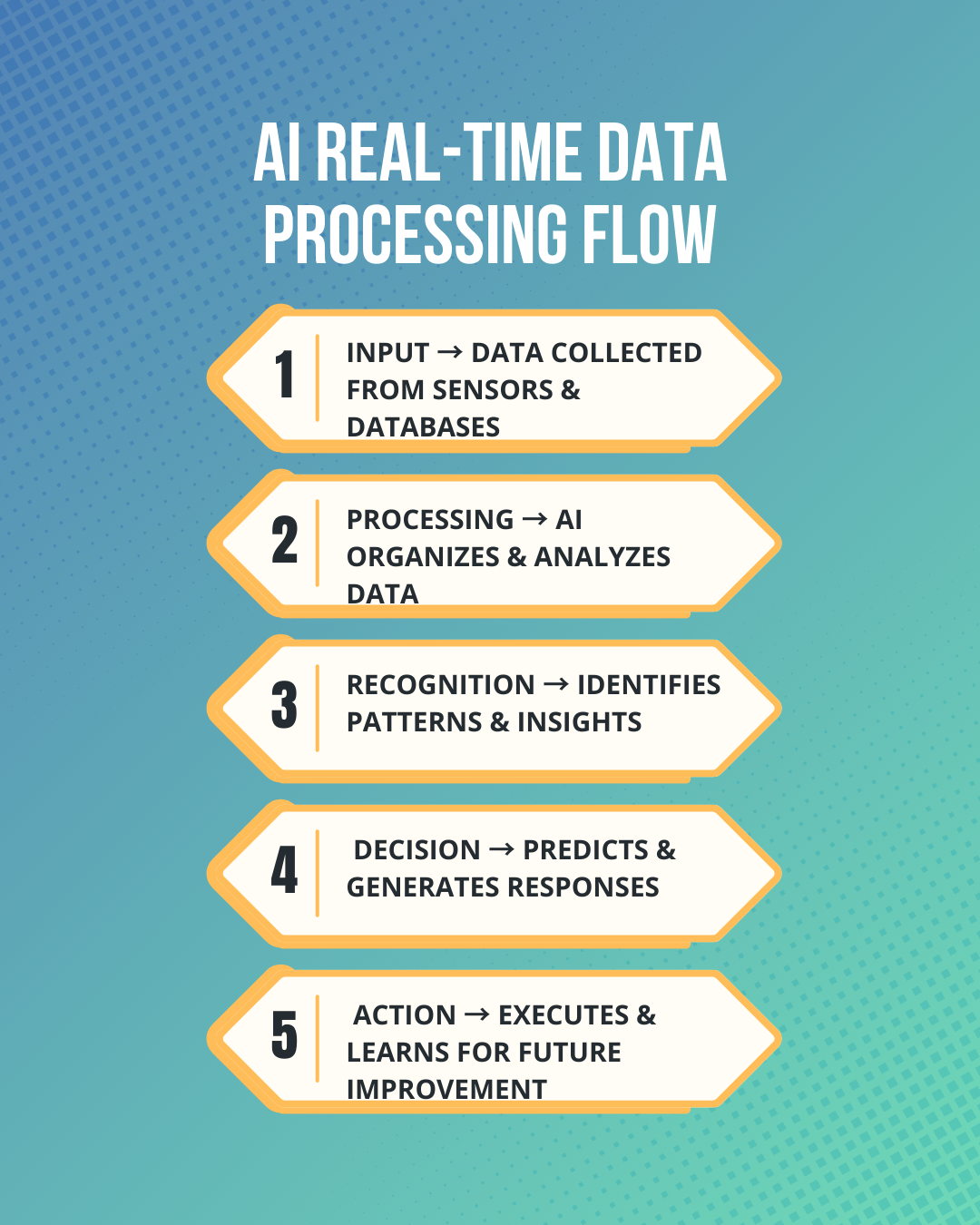
In today’s fast-paced world, real-time AI decision-making has become a critical force across industries. It refers to AI systems that process data and make informed decisions instantaneously without human intervention. This capability is revolutionizing sectors where speed, accuracy, and automation are paramount.
From fraud detection in finance to personalized customer experiences, businesses leveraging real-time AI can respond proactively rather than reactively. The ability to analyze vast amounts of data, recognize patterns, and make immediate decisions is reshaping how organizations operate, innovate, and stay competitive.
Key Technologies Enabling Real-Time AI
Machine Learning Algorithms
Machine learning is the backbone of real-time AI. Various models process incoming data and generate predictions instantly.
- Supervised and Unsupervised Learning: These approaches allow AI to recognize patterns and classify data with or without labeled datasets.
- Reinforcement Learning: AI continuously refines its decision-making by learning from outcomes, making it highly adaptive in real-world applications.
Big Data and Cloud Computing
To power real-time decisions, AI relies on high-speed data processing and scalable infrastructure.
- Data Processing Capabilities: AI systems analyze large datasets instantly, making them ideal for environments where split-second decisions are required.
- Scalability and Flexibility: Cloud computing ensures AI models can handle fluctuating workloads, making them highly efficient for real-time analysis in sectors like finance and healthcare.
Edge Computing
With edge AI, data is processed closer to the source rather than relying on distant cloud servers.
- Reducing Latency: In applications like autonomous vehicles or industrial automation, milliseconds matter. Edge computing removes delays in decision-making.
- Local Decision-Making: AI at the edge enables offline capabilities, ensuring continuous operation even when network connectivity is unstable.
Real-World Applications of Real-Time AI
Business and Finance
In the financial sector, fraud detection has become more precise with AI identifying suspicious transactions in milliseconds. Algorithmic trading leverages real-time AI to execute trades at the most opportune moments, optimizing investment strategies beyond human capabilities.
Healthcare
AI-driven patient monitoring enhances healthcare by detecting anomalies in real-time, enabling early intervention. AI-assisted drug discovery accelerates research, reducing the time required to develop new treatments.
Autonomous Vehicles
Self-driving cars rely on AI for navigation and safety, continuously analyzing their environment to avoid collisions. Real-time AI also improves traffic management, optimizing urban mobility by adjusting signals and rerouting congestion dynamically.
Customer Experience
From personalized recommendations in e-commerce to AI-powered chatbots, businesses use real-time AI to create tailored customer interactions. AI anticipates user behavior, increasing engagement and retention.
Why Real-Time AI Matters
Speed and Efficiency
AI outpaces human decision-making, processing massive datasets in seconds. This speed gives businesses a competitive edge, improving reaction times and operational efficiency.
Enhanced Accuracy and Predictive Power
AI’s ability to identify trends and anomalies enhances precision. Whether detecting cybersecurity threats or predicting consumer behavior, AI reduces errors and improves outcomes.
Cost-Effectiveness
Automating real-time decision-making reduces labor costs while increasing productivity. Companies can optimize resources, minimizing waste and enhancing profitability.
Improved Customer Satisfaction
By responding instantly to customer needs, businesses create seamless, personalized experiences. AI-driven interactions improve user engagement, fostering long-term loyalty.
Challenges and Ethical Considerations
Data Privacy and Security
Real-time AI relies on vast amounts of data, raising concerns about data protection and compliance. Businesses must ensure secure, ethical data handling to maintain trust.
Algorithmic Bias and Accountability
AI models can inherit biases from training data, leading to unfair outcomes. Addressing this requires continuous monitoring, transparency, and ethical AI development.
Infrastructure and Integration
Adopting real-time AI requires robust infrastructure, including reliable data sources and seamless integration with existing systems. Companies must balance cost and complexity when deploying AI solutions.

Co-Founder & CMO at Merfantz Technologies Pvt Ltd | Marketing Manager for FieldAx Field Service Software | Salesforce All-Star Ranger and Community Contributor | Salesforce Content Creation for Knowledge Sharing